
Dermatologist in Barcelona
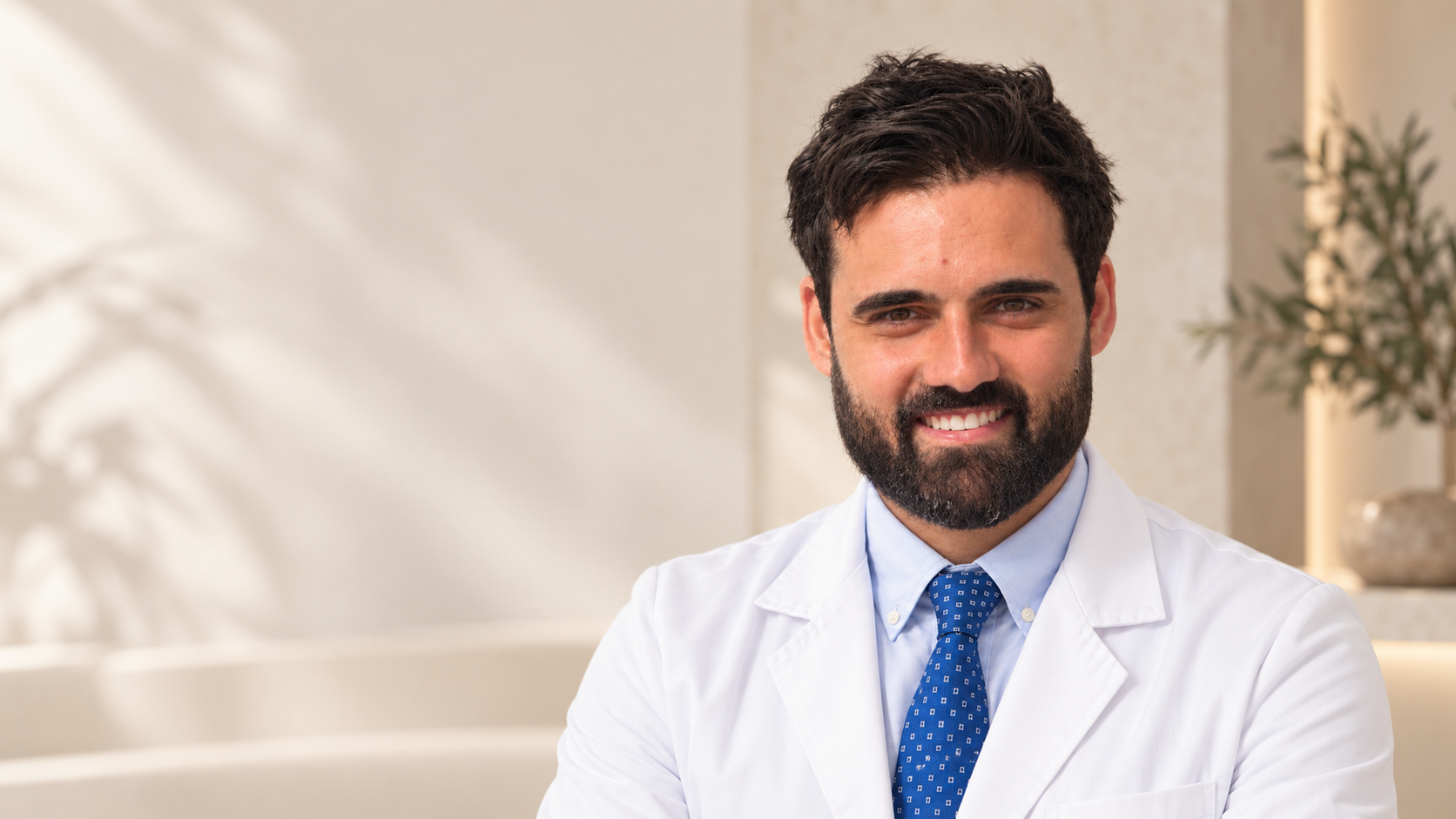
Dr Álvaro Gómez Tomás
Medical and surgical dermatology, hair and scalp care
I help you understand what is happening to your skin and hair, and what we can do about it. With clear explanations of treatment, day-to-day care and the results you can expect.
What patients
say
“A very good professional, empathetic and meticulous.”
Translated from the Spanish original.
“Great care, kind and punctual.”
Translated from the Spanish original.
“It was my first visit and the care was excellent. A great professional.”
Translated from the Spanish original.
Your concerns about your skin
and hair
 General dermatologyPsoriasis, acne, eczema, seborrhoeic keratoses and other common skin conditions.View detailsClose details
I treat common conditions such as psoriasis, acne and eczema, as well as skin growths such as seborrhoeic keratoses. We look at the lesions, the symptoms they cause and what you have tried so far to assess which treatment you need.
With psoriasis, acne or eczema, the aim is to control flare-ups and discomfort. If a seborrhoeic keratosis or another skin growth worries you, we clarify what it is and whether it needs treatment. I explain the options, home care and when to review your progress.
 Mole checks and removalUnderstand which moles need monitoring and when removal is appropriate.View detailsClose details
A new or changing mole can be worrying, especially if you have had skin problems before or have a family history. A mole check helps identify which lesions need monitoring and whether any should be removed.
I explain which changes to look for, how to protect your skin from the sun and how often a skin check makes sense for you. A lesion that appears, changes, bleeds or does not heal should be assessed by a doctor.
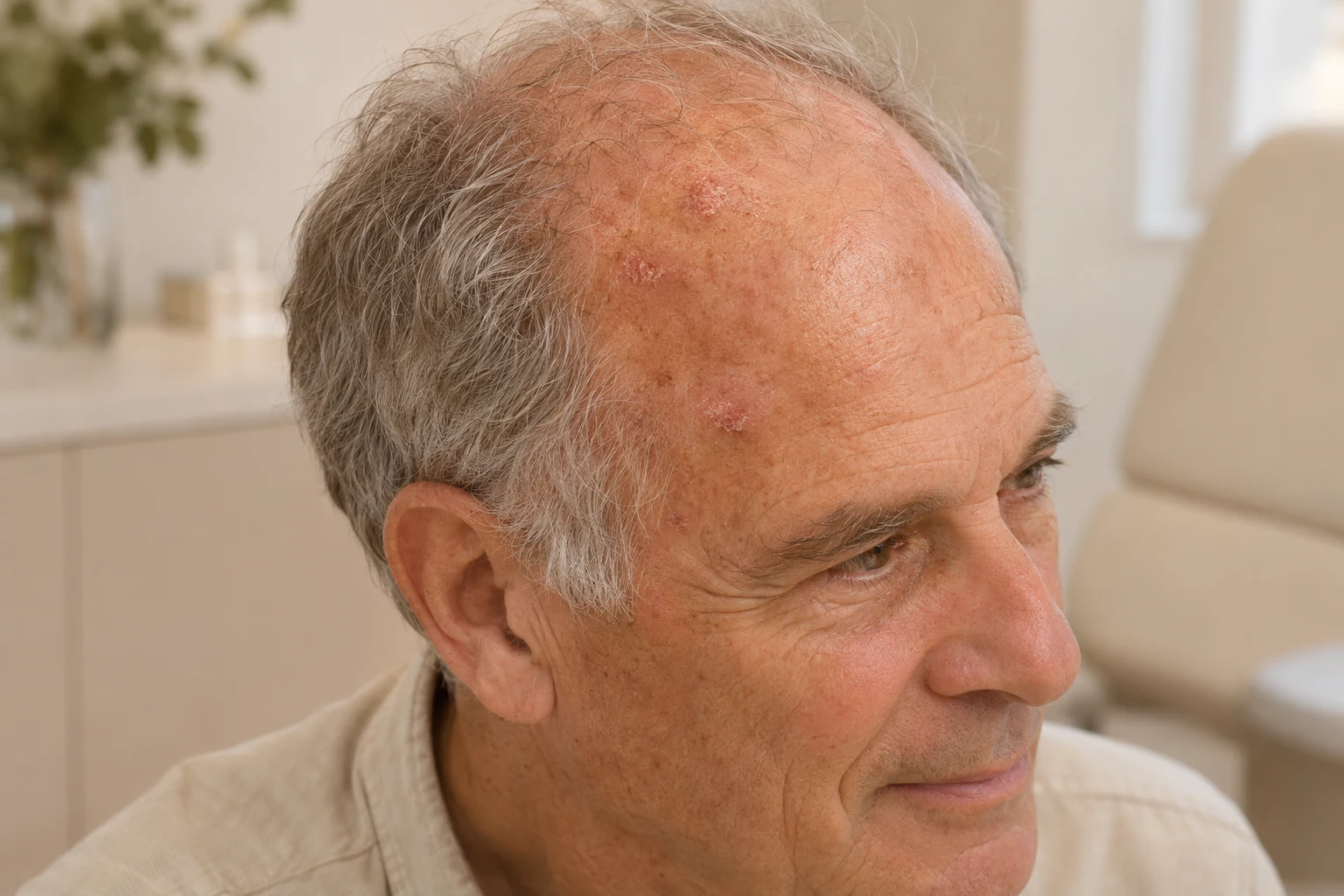 Skin cancer and actinic keratoses
Understand what a lesion is and how it can be treated, with each step clearly explained.
View detailsClose details
If you have a suspicious lesion or a skin cancer diagnosis, it is understandable to worry about what happens next. I explain what we know, what still needs confirming and the treatment options, so that you can make decisions with an understanding of each step.
I also assess and treat actinic keratoses, precancerous lesions linked to accumulated sun damage. We agree on treatment and follow-up based on the type of lesion and your medical history, with guidance on what to watch for between appointments.
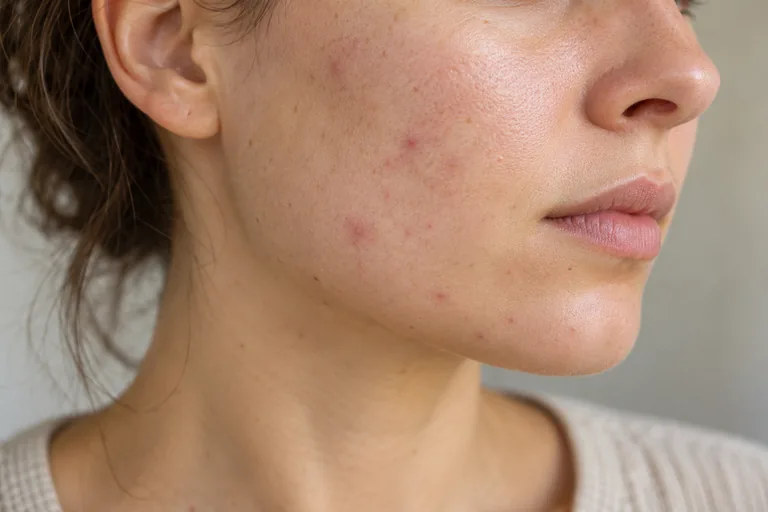 Acne and rosaceaReduce flare-ups and discomfort so your skin has less impact on everyday life.View detailsClose details
Spots, redness or stinging can affect how you see yourself and whether you feel like being in a photo or meeting someone. That discomfort matters too. We review what is happening and what you have tried to find a treatment you can keep up with.
Acne and rosacea need different treatments. In both cases, I explain which care is appropriate, what changes to expect and when to assess the response. The aim is to control flare-ups and give you less to worry about with your skin.
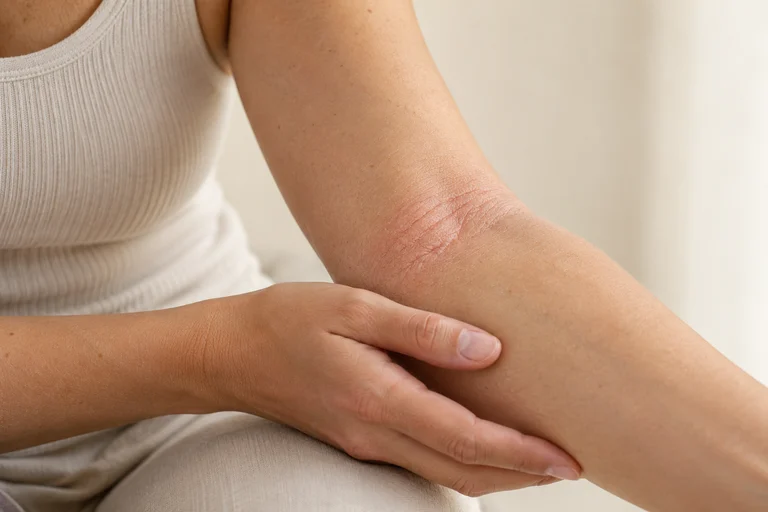 Skin allergies and atopic dermatitis
Relieve itching so you can sleep better and know what to do during a flare-up.
View detailsClose details
When itching disrupts your sleep or your skin keeps reacting, you can end up worrying about everything that touches it. We look at how the symptoms develop and which products you use to distinguish between a contact allergy, atopic dermatitis or another cause.
We aim to relieve itching and control flare-ups with specific instructions: what to use, how to apply it and what to do if symptoms worsen. Knowing how to care for your skin between flare-ups is also part of treatment.
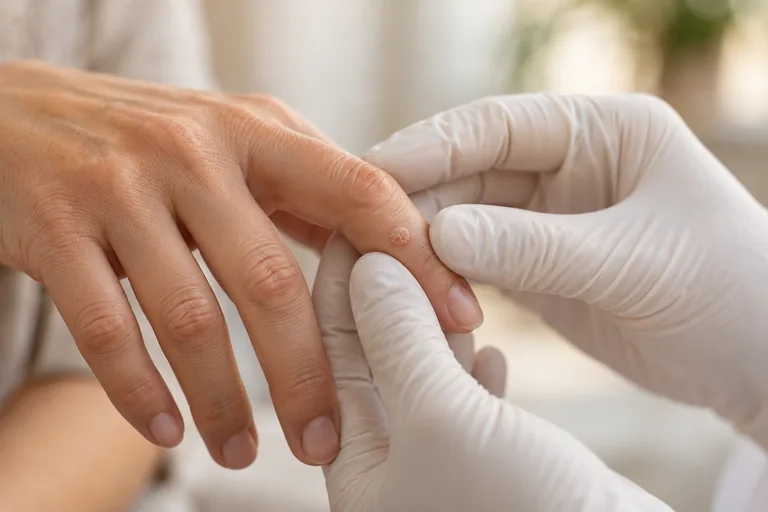 Viral wartsTreatment of persistent warts or warts that have not responded to previous treatment.View detailsClose details
I specialise in difficult-to-treat or long-standing warts. I combine different treatment methods according to the lesions and their response to previous treatments.
We review where the warts are, how long they have been there and what you have tried. I explain the options I recommend, the discomfort they may cause and the care you will need afterwards.
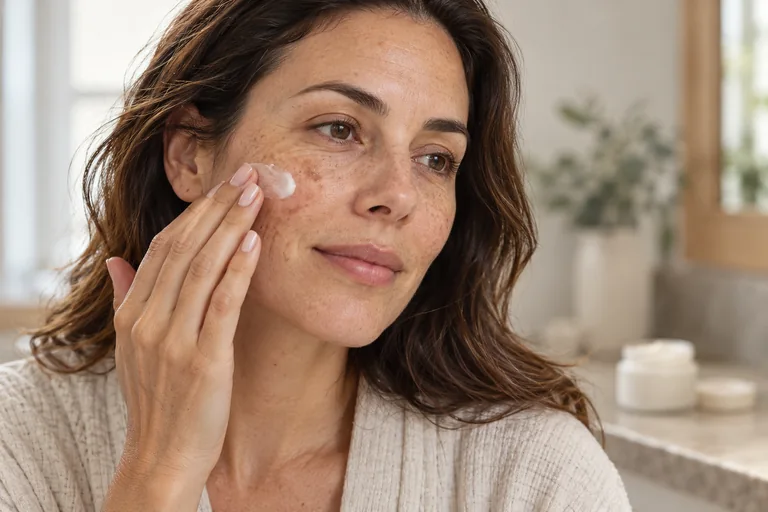 Pigmentation and skincareUnderstand your pigmentation and which skincare products are worth using.View detailsClose details
If pigmentation bothers you or you have collected products without knowing whether they help, we start by understanding your skin. We assess whether it is melasma, solar lentigines or another type of pigmentation before discussing treatment.
We review what you use and put together a cleansing, moisturising and sun protection routine you can maintain. I explain the improvement we can expect and the limits of each option, so you can decide which care is worth your time and money.
 Hair and scalp careHair shedding, loss of density, a receding hairline or a thinner ponytail.View detailsClose details
We assess both hair shedding and changes in density: a widening parting, a receding hairline or a thinner ponytail. We review how these changes have developed and examine your scalp to investigate the cause and discuss treatment.
I explain which options make sense for you, the results to expect and when we can assess whether treatment is working. This helps you make an informed decision and follow your progress without drawing conclusions in the mirror every day.
What happens
at your appointment
At your first appointment, we review the problem and any previous treatments. At follow-up visits, we check what has changed and whether your treatment needs adjusting.
Understanding the problem
I ask when it started and what you have tried. I then examine your skin or scalp and assess whether any tests are needed.
Making an informed choice
We discuss the options, the improvement we can expect and possible side effects. We also talk about how to follow the treatment and any difficulties it may present for you.
Knowing what to do next
I explain how to use the treatment and when to return. At follow-up, I check whether you are improving and how well you tolerate it. If the response is not what we expected, we review the options.
Acne beneath the surface.
Select an option to see how the follicle changes. Several of these mechanisms can act at the same time.
The sebaceous gland
It produces sebum, which helps lubricate the skin. When production increases, sebum can build up inside the follicle.
Control excess sebum when appropriate.
The follicle becomes blocked
Shed skin cells can build up with sebum and form a plug. This is how comedones develop.
Reduce blockage and prevent new plugs.
The skin’s microbiota
Cutibacterium acnes is part of the skin’s normal microbiota. Changes within the follicle can contribute to its involvement in inflammation.
Address this mechanism when the type of acne calls for it.
Inflammation and a pustule
The inflammatory response causes redness and swelling around the follicle. This view shows a pustule with whitish or yellowish contents.
Reduce inflammation and discomfort.
I explain which processes the treatment I recommend acts on.

Thorough, approachable dermatological care
Dr Álvaro Gómez Tomás is a dermatologist in Barcelona and a specialist dermatologist at Vall d’Hebron University Hospital, where he completed his MIR specialist training.
He received the Extraordinary End-of-Degree Award for the highest academic record in his UAB-UPF Medicine class. He holds a master’s degree in Paediatric Dermatology and a doctorate in skin cancer from the Universitat Autònoma de Barcelona.
He combines general dermatology and hair care with clinical research. He has authored multiple research articles in national and international journals.
SpecialtiesBook an appointment
with the doctor
In-person dermatology and hair consultations in Barcelona. To request a first appointment or a follow-up, visit my Doctoralia profile.
View the location using the “Get directions” link.
PracticeMetro · MParking · PDrag to explore · Select a marker for details
By metro
- L1Urgell1–2 min
- L2Sant Antoni6–8 min
- L1L2Universitat8–10 min
Approximate walking times to the practice.
By bus
- Gran Via – UrgellH1252
- Comte d’Urgell – Gran ViaV11
- Villarroel – Gran Via59141
- Villarroel – SepúlvedaH16D5055120
By car
- Parking Villur Comte d’Urgell, 56
- Parking Urgel Floridablanca, 121
- Parking Sepúlveda Sepúlveda, 156–160